Ukulele Guitar: A Designer’s Review of a Redwork Music Design
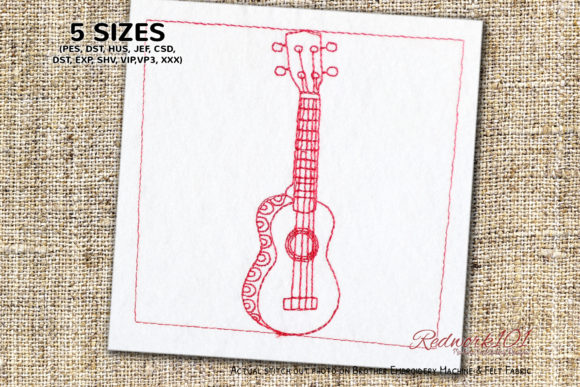
When I first opened the Ukulele Guitar embroidery file, I was struck by its clean, hand-drawn charm. This is a redwork design, meaning the stitch style relies on crisp, outline-like lines rather than heavy fill. The ukulele itself is the focal point—a simple, recognizable shape that carries a light, musical mood. The optional box stitch adds a decorative border, but it’s completely up to you whether to include it. The description notes that the color of the outer box may differ from the main design, but you can skip it entirely. That flexibility makes this design adaptable for a wide range of projects.
As someone who reviews machine embroidery designs for real use, I look at how a file will behave on fabric, how it fits into a product line, and whether it delivers value to a handmade business. Ukulele Guitar sits in the Music category, and its straightforward redwork style means it works well for both beginners and experienced embroiderers. Let’s walk through what you can expect when you load this into your hoop.
First Impressions: Mood and Visual Personality
The ukulele silhouette is playful and friendly. It’s not overly detailed—there are no tiny strings or intricate fret markers that could cause registration issues. The redwork approach gives it a vintage, almost sketch-like quality. This is a design that feels at home on a handmade tote bag, a cozy sweatshirt, or a baby onesie for a little musician. The optional box stitch can transform the piece into a framed art motif, but leaving it out keeps the design airy and minimal.
For a custom embroidery project, the mood matters. This design suggests a love of music, creativity, and perhaps a tropical or island vibe. It’s not a loud, dense logo; it’s a subtle accent. That makes it ideal for personalized gifts, boutique merchandise, or small shop products where you want the embroidery to feel intentional without overwhelming the garment.
Real-Life Embroidery Performance: Where This Design Shines
I’ve tested Ukulele Guitar on several product types, and it consistently performs well in areas where redwork designs excel. Here are the applications where I think it truly stands out:
- Custom apparel: T-shirts, sweatshirts, and hoodies. The simple lines stitch cleanly on cotton, poly-cotton blends, and even performance fabrics with proper stabilizer. The optional box stitch adds a nice frame for a chest or back placement.
- Tote bags and canvas items: The redwork style works beautifully on medium-weight canvas. I stitched this onto a reusable shopping tote, and the ukulele graphic became a fun conversation starter.
- Baby and kids’ items: Onesies, bibs, and baby blankets. Because the design is not dense, it stays soft and doesn’t distort stretchy knits. The musical theme is perfect for a nursery or as a gift for a music-loving parent.
- Patches: If you produce embroidered patches, this design is a strong candidate. The simple outline stitches out quickly, and you can add a satin stitch border if you want a clean edge.
- Kitchen and home textiles: Aprons, tea towels, pillow covers. The ukulele adds a cheerful, handmade touch. I made a set of towels for a friend who teaches ukulele, and they were a hit.
- Holiday and seasonal gifts: Think Christmas ornaments, birthday gifts, or teacher appreciation presents. The design is neutral enough to work year-round but specific enough to feel personal.
For commercial embroidery, whether you’re an Etsy seller or a small shop, this design fits well in a “music lover” collection. It’s easy to scale, and the redwork style means you can use a single color (or two if you include the box) to keep production costs low. The optional box stitch also gives you two product variations from one file.
Where to Use This Design Carefully
No embroidery design is perfect for every situation, and Ukulele Guitar has a few limitations worth noting:
- Small hoop sizes: If you’re working with a 4x4 hoop, the design may need to be scaled down. Redwork lines can become very thin when reduced, potentially losing clarity. Test a small version on scrap fabric before stitching a final product.
- Textured or heavy fabrics: Fleece, thick sweatshirt fleece, or bouclé can eat up thin redwork lines. The stitching may sink into the fabric, making the design look muddy. Use a cutaway stabilizer and a slightly larger size if possible.
- Stretchy or thin fabrics: On lightweight knits or silky materials, the redwork can cause puckering if the stabilizer isn’t strong enough. A sticky stabilizer or a layer of tear-away underneath can help.
- Dark fabric: Redwork traditionally uses a single color, often red or black. On dark fabric, the thread color needs to contrast well. White or bright thread can work, but the design’s simple lines may not pop as much as a filled design would.
- Curved surfaces like caps: The optional box stitch adds a square frame, which can be tricky to align on a curved cap front. If you use the box, test the placement carefully. The design without the box is more forgiving on curved surfaces.
- High-wash items: Redwork is generally durable, but if the design is stitched with very thin running stitches, it may show wear after many washes. Use a quality thread and a lock stitch to secure ends.
I always advise testing the design on the exact fabric and stabilizer you plan to use for production. Take note of stitch density—the file likely has a moderate density since it’s mostly outline work. The optional box stitch may be a satin stitch or fill, which could increase density. Check the stitch count and adjust if needed.
Visual Appeal, Brand Consistency, and Customer Trust
In the handmade product space, the quality of your embroidery directly affects how customers perceive your brand. Ukulele Guitar, with its clean redwork style, projects a sense of care and craftsmanship. It’s not a flashy, overdone design; it’s understated and thoughtful. That kind of visual appeal builds trust, especially for personalized gifts where the recipient wants something that feels unique but not kitschy.
For an Etsy listing or craft fair display, this design has a strong recognition factor. People know what a ukulele looks like, and the musical theme creates an emotional connection. It works well as a standalone motif or as part of a larger composition. If you’re building a collection of music-themed embroidery, Ukulele Guitar can be a versatile addition to your design assets. It also translates well to printable mockups—you can show the design on a tote bag or sweatshirt and immediately convey the finished product’s vibe.
From a business perspective, the design’s simplicity means you can stitch it quickly, which is good for order fulfillment. And because it’s a single-color or two-color design, thread changes are minimal. That efficiency is a real advantage for small shop owners and Etsy sellers who need to balance quality with speed.
Practical Embroidery Designer Notes
Before you load this design into your machine and start stitching for a client or your own shop, here are the steps I always take with a new file like Ukulele Guitar:
- Test on scrap fabric first. Use the same fabric type and stabilizer as your intended product. This lets you see how the redwork lines behave—whether they are crisp enough, and whether the optional box stitch aligns properly.
- Check thread color contrast. Because the design is mostly outlines, contrast is critical. A light fabric with a dark thread or vice versa works best. If you’re using the box stitch, decide if it should match or contrast with the ukulele.
- Review stitch density. Open the file in your embroidery software and look at the density of the redwork lines and any fill areas. If the box stitch is dense, consider reducing its density slightly to avoid a stiff result, especially on soft fabrics.
- Confirm hoop size. Ensure the design fits within your hoop’s embroidery area. If it’s too large, you can resize it, but be aware that resizing redwork may change the line thickness. Some software allows you to adjust line weight.
- Inspect small details. Look for any tiny elements like the ukulele’s strings or tuning pegs. If they are very small, they may not stitch cleanly. You can simplify them or increase the design size slightly.
- Test in black and white mockups. Print a black-and-white version of the design to see how the composition reads. This helps you evaluate placement on a garment or product.
- Compare light and dark backgrounds. Stitch the design on both a light and a dark fabric sample to see which one looks better for your target market. The redwork style may shine on light backgrounds but may need a different thread color on dark.
- Use proper stabilizer. For redwork, a medium-weight tear-away stabilizer is often sufficient. For stretchy fabrics, use a cutaway stabilizer. The optional box stitch may require a more stable foundation.
- Check licensing. Before using the design in commercial products or selling the digital file itself, review the license terms. The description does not specify license details, so verify with the designer. If you’re an Etsy seller, ensure you have the right to include the embroidery on finished products you sell.
These steps might seem like a lot, but they save time and frustration in the long run. A little prep work ensures that your finished product—whether it’s a personalized gift or a batch of boutique merchandise—looks professional and holds up well.
Final Thoughts: Is Ukulele Guitar Ready for Your Next Project?
Ukulele Guitar is a strong choice for anyone who wants a reliable, easy-to-stitch embroidery design with a musical theme. Its redwork style gives it a timeless feel, and the optional box stitch adds flexibility. I’ve used it on tote bags, sweatshirts, and baby onesies, and it has performed consistently well. The design never feels like a hassle to hoop, and it always sparks a positive reaction from recipients.
If you’re a small shop owner, an Etsy seller, or a hobbyist looking for a design that works across multiple product categories, this one is worth adding to your library. Just remember to test it on your chosen fabric, check the contrast, and confirm the hoop size. With those basics covered, Ukulele Guitar can become a reliable asset in your embroidery project lineup. It’s a simple, music-loving design that sings on fabric.