Three Fresh Lady Finger Redwork: A Design Review for Business Merch
As an embroidery designer who has spent years evaluating machine embroidery designs for small business merchandise, I approach each new file with a practical eye. I ask: Will this work on a cap? Will it hold up on a tote bag? Does it strengthen brand identity or just add decoration? When I first reviewed Three Fresh Lady Finger Redwork, I saw immediate potential for food-based businesses, especially cafes, farm stands, and specialty grocers looking for custom apparel and embroidered patches that feel handmade and approachable.
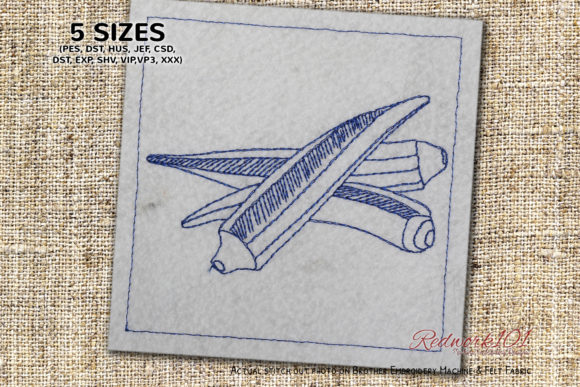
The design presents three ladyfingers, or okra, in a redwork style. Redwork traditionally uses a single color, often red thread, with simple outlines and minimal fill. This gives the design a clean, rustic, and slightly vintage feel. For a small business, this translates into a look that is both professional and friendly. It does not scream for attention but rather invites a closer look. The three ladyfingers are arranged in a natural cluster, slightly varied in curve and angle, which keeps the composition organic rather than stiff. This matters when you are building a brand identity around fresh, wholesome food.
How Three Fresh Lady Finger Redwork Performs on Real Business Merchandise
When I test a digital embroidery file for real-world application, I think about patches, uniforms, aprons, caps, and tote bags. Three Fresh Lady Finger Redwork performs well across these formats because of its moderate stitch density and clear outlines. The redwork approach keeps the design lightweight, which is ideal for cap embroidery where thick fills can cause distortion. On a cap front or side panel, the three ladyfingers sit naturally without overwhelming the garment. For a small business that wants a subtle but recognizable mark, this design delivers.
For embroidered patches, this design is a strong candidate. The simple outlines and open areas allow the patch backing to hold shape without puckering. I would recommend testing it at a small patch size, around two to three inches, to see if the detail holds. The tapering ends of the ladyfingers are delicate, so checking the stitch count and thread colors before production is essential. If the design is too small, the tips may blur. But at the right scale, it reads clearly and becomes a finished product that customers will notice.
Apron embroidery is another natural fit. A cafe or farm-to-table restaurant could place this design on the chest or lower corner of an apron. The redwork style adds a handmade touch that aligns with artisanal food service. Tote bags also benefit from this design. Whether embroidered directly or applied as a patch, the three ladyfingers create a recognizable mark that customers will associate with quality. For Etsy sellers and handmade brands, this design can serve as a product label accent or a standalone decorative element on merchandise.
Where to Use Three Fresh Lady Finger Redwork with Care
No design is perfect for every surface. Three Fresh Lady Finger Redwork requires attention to fabric texture and placement. On dark uniforms, the red thread may not stand out as boldly as white or yellow would. If your business uses dark shirts or caps, consider testing the thread color contrast against the fabric. A printable mockup for client approval can help avoid disappointment before you commit to a production run.
Curved surfaces like cap fronts or sleeve cuffs require careful hoop size and stabilizer selection. The slight bend in each ladyfinger is part of the charm, but if the fabric stretches unevenly, the curves can distort. I recommend using a cutaway stabilizer for knits and a tearaway for wovens. Always test on real fabric before stitching a batch of custom apparel. The stitch density at your target size will determine whether the design holds its shape or becomes a source of frustration.
Small patch sizes are another area of caution. If you scale the design down too much, the fine details of the ladyfinger tips and the spaces between them may become muddled. Check the stitch count and hoop size before you begin. If the design becomes too dense, it may cause thread breaks or fabric puckering. For small business merch, consistency across multiple units is critical. One bad stitch-out can undermine customer trust.
Brand Identity and Customer Trust with Three Fresh Lady Finger Redwork
Embroidery is a tactile medium. When a customer receives a tote bag or a cap with a well-executed embroidered patch, they perceive value. Three Fresh Lady Finger Redwork, with its clean redwork aesthetic, communicates care and attention to detail. For a small business, this is gold. It says you take pride in your products, whether you are selling fresh produce, baked goods, or handmade crafts. The design reinforces brand identity by adding a visual anchor that customers recognize and remember.
The design also supports visual consistency. If you are building a brand around farm-fresh ingredients or traditional cooking methods, the redwork style reinforces that narrative. It is not overly modern or flashy, which makes it suitable for businesses that want to appear timeless and trustworthy. The single-color approach simplifies production. You can use one thread color across all your merchandise, reducing setup time and cost. This is especially valuable for small business owners who manage their own embroidery or work with a decorator on a tight budget.
For handmade brands and Etsy sellers, this design works as a standalone product label or as part of a larger set of design assets. Pair it with a custom logo or let it stand alone as a decorative element. Either way, it adds a layer of professionalism that can increase buyer engagement and product value. A well-placed embroidered patch on a tote bag or apron can turn a simple item into a premium offering that customers are proud to carry.
Practical Embroidery Designer Notes for Three Fresh Lady Finger Redwork
Before you take Three Fresh Lady Finger Redwork into production, here are a few steps I recommend. First, test the design in black and white. This helps you see the spacing and outlines without the distraction of color. If the design reads clearly in monochrome, it will likely work well in red or any other thread color you choose. This is a simple but effective way to catch spacing issues early.
Next, confirm the hoop size and stitch count. These details are not provided in the description, so reach out to the designer or check the file metadata before stitching. Make sure the design fits your target hoop and that the stitch count is appropriate for your fabric. A design that is too dense for the chosen fabric will cause problems during stitching and shorten the life of the finished product.
Thread color contrast is critical. Red on light fabrics like white, cream, or light green will pop nicely. On medium or dark fabrics, consider using a lighter thread color or a different shade of red to maintain visibility. Always create a printable mockup for client approval before stitching the final product. This step prevents misunderstandings and ensures that the client sees what you see.
Finally, verify the commercial embroidery license. If you are using this design for small business merch, you need to know whether the license covers commercial use. If not, contact the designer to secure the right to use it on products you sell. This is a standard part of working with digital embroidery files, and skipping it can lead to legal issues down the road.
Comparing Three Fresh Lady Finger Redwork to Other Design Assets
If you already have a logo or other design assets, compare Three Fresh Lady Finger Redwork beside them. Does it match the style and weight of your existing brand elements? If your brand is bold and modern, the redwork may feel too delicate. But if your brand is rustic, handmade, or food-focused, it will integrate seamlessly. For businesses that sell food products, this design can also serve as a product label accent. Imagine a small jar of jam or a bag of coffee beans with a small embroidered patch attached. It adds a tactile, premium feel that printed labels cannot replicate.
The design also works well as part of a larger set of design assets. If you plan to offer multiple merchandise items, consistency across the line matters. Three Fresh Lady Finger Redwork can anchor a collection of aprons, caps, tote bags, and patches. Its simple style allows it to pair with other designs without clashing. For a small business, this kind of versatility is a practical advantage.
Final Thoughts on Three Fresh Lady Finger Redwork for Small Business Merch
Three Fresh Lady Finger Redwork is a versatile machine embroidery design that brings warmth and authenticity to small business merchandise. Its redwork style keeps the look clean and approachable, while the subject matter connects directly to food and agriculture. With proper testing and attention to fabric, scale, and placement, this design can elevate aprons, caps, tote bags, and patches into professional brand assets. Whether you run a cafe, a farm stand, a bakery, or a handmade goods shop, this design deserves a spot in your embroidery file collection. Just remember to test before you stitch, and always confirm your licensing and technical specs. A well-placed embroidered patch can turn a simple garment into a lasting brand impression that customers remember and trust.